Itinerary
What to See in Madrid in 3 Days
Three days on foot, 17.2 km and 24 stops: the three major museums on the Paseo del Prado, Madrid de los Austrias, El Rastro, and the Salamanca, Chueca, and Malasaña neighbourhoods.
Three days allow you to see the three Paseo del Prado museums at a leisurely pace, leaving time for the neighbourhoods. The first day is classic Madrid, from the Royal Palace to El Retiro; the second covers Guernica, El Rastro, and La Latina; the third includes the Thyssen and the Archaeological Museum in the morning, followed by the Salamanca, Chueca, and Malasaña neighbourhoods in the afternoon and evening.
Before you go
- The ideal order is to start on a Friday or Saturday so that the second day falls on a Sunday, the day of El Rastro.
- Mind the closing days: the Reina Sofía is closed on Tuesdays; the Archaeological and Romanticism museums on Mondays; the Thyssen is only open from 12:00 to 16:00 on Mondays.
- Book a time slot for the Royal Palace, the Prado, the Reina Sofía, and the Thyssen. The Archaeological and Romanticism museums do not require it.
- It is about 17.2 km on foot over three days. If you get tired, the metro reaches all the stops.
Day 1
Madrid de los Austrias, the Prado and the Retiro
From kilometre zero to the Royal Palace through the old town, lunch in the centre and an afternoon of art and parks along the Paseo del Prado.
The day at a glance
- 9:001. Puerta del Sol
- 9:202. Plaza Mayor
- 10:003. Royal Palace
- 11:454. Almudena Cathedral
- 12:305. Mercado de San Miguel
- 13:456. Barrio de las Letras
- 14:457. Prado Museum
- At sunset8. Retiro Park
- 19:009. Cibeles and Gran Vía
Day 1 · Morning
1. Puerta del Sol
Free
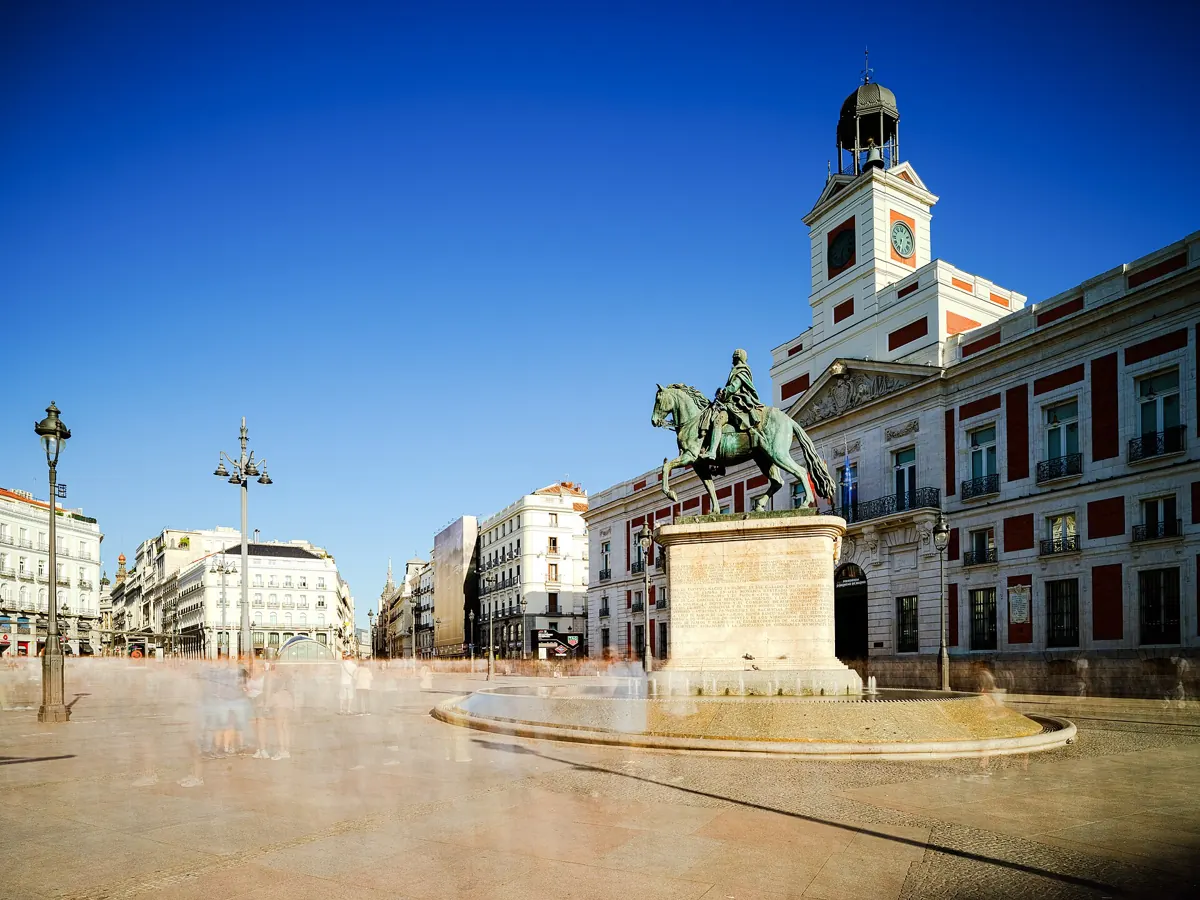
Puerta del Sol
9:00 · 15 min
The centre of Madrid and Spain: on the ground, in front of the Real Casa de Correos, is the kilometre zero plaque for the radial roads. Its tower clock chimes in the New Year, and on the corner with Calle del Carmen is the statue of the Bear and the Strawberry Tree, the symbol of the city.
Tip: First thing in the morning the square is quiet and it is easy to take a photo of kilometre zero. Sol is also a major metro and Cercanías hub: a good starting point if you are staying outside the centre.
Next stop: 5 min walk (0.4 km)
2. Plaza Mayor
Free
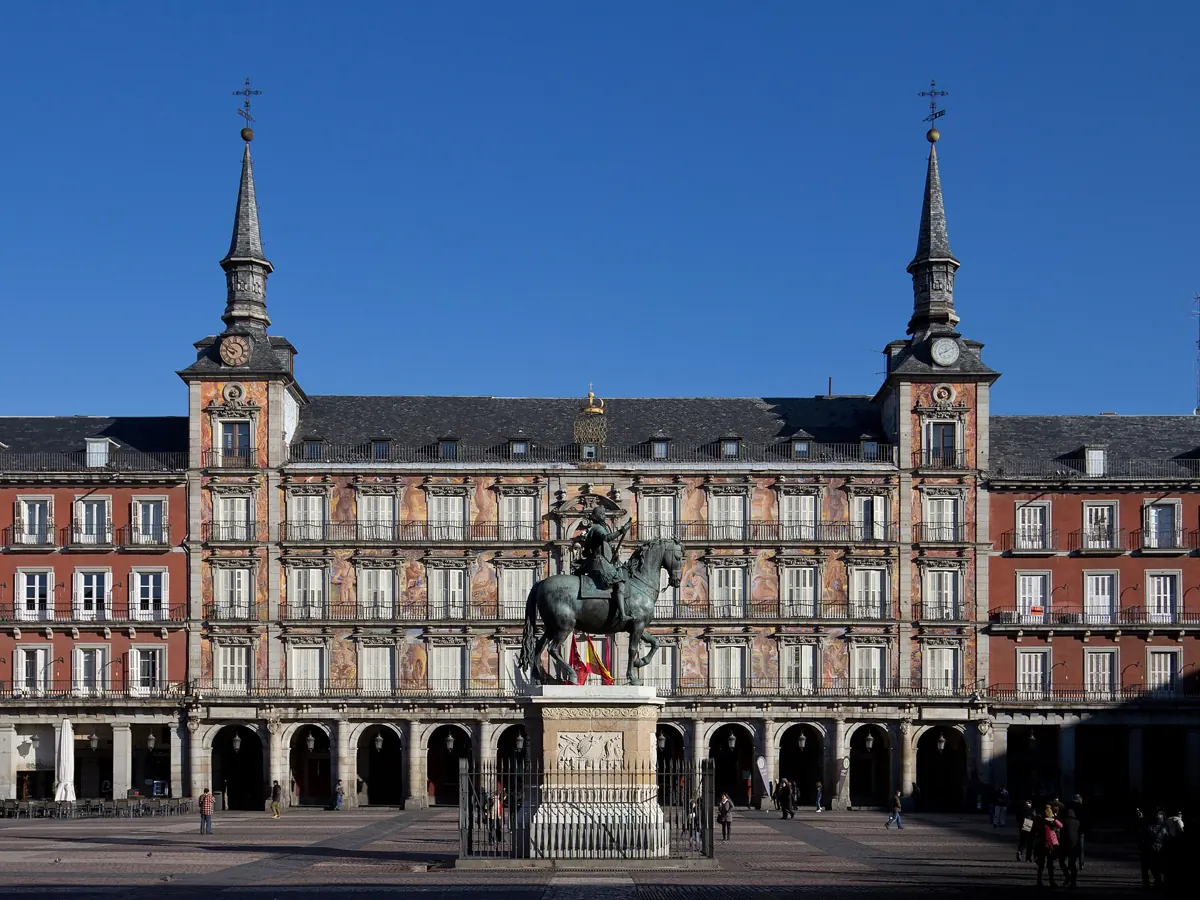
Plaza Mayor
9:20 · 20 min
The grand arcaded square of the Habsburgs, finished in 1619 and rebuilt several times after fires. In the centre stands the equestrian statue of Philip III; on the north side, the Casa de la Panadería with its painted façade. It was once a market, a bullring and the setting for autos-da-fé.
Tip: Leave through the Arco de Cuchilleros to see the staircase and the towering houses of Cava de San Miguel. The terraces in the square are expensive: it is better to grab a coffee in the surrounding streets.
Next stop: 13 min walk (1.0 km)
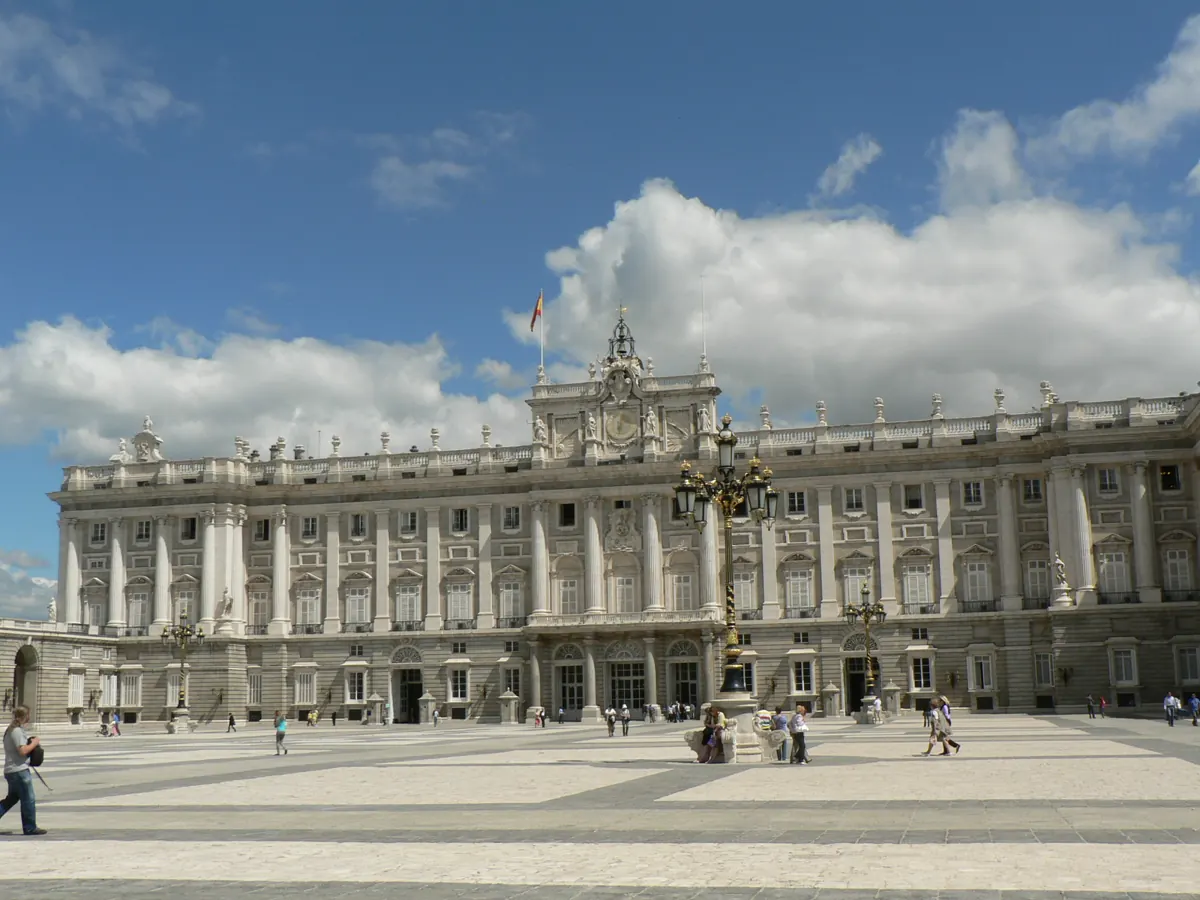
3. Royal Palace
18 €; with the Royal Collections Gallery, 24 €
Calle de Bailén, s/n
10:00 · 1 h 30 min
Best to book a timed ticket
The official residence of the Spanish royals, built in the 18th century on the site of the old Alcázar, which burned down in 1734. It is one of the largest royal palaces in Europe: you can visit the Throne Room, Tiepolo's ceilings, the Royal Armoury and the Royal Pharmacy.
Tip: Book a timed ticket on the Patrimonio Nacional website and arrive at opening time. From October to March it is open from 10:00 to 18:00 (Sundays until 16:00). EU citizens and residents enter for free from Monday to Thursday afternoons, but expect queues.
Next stop: 3 min walk (0.2 km)
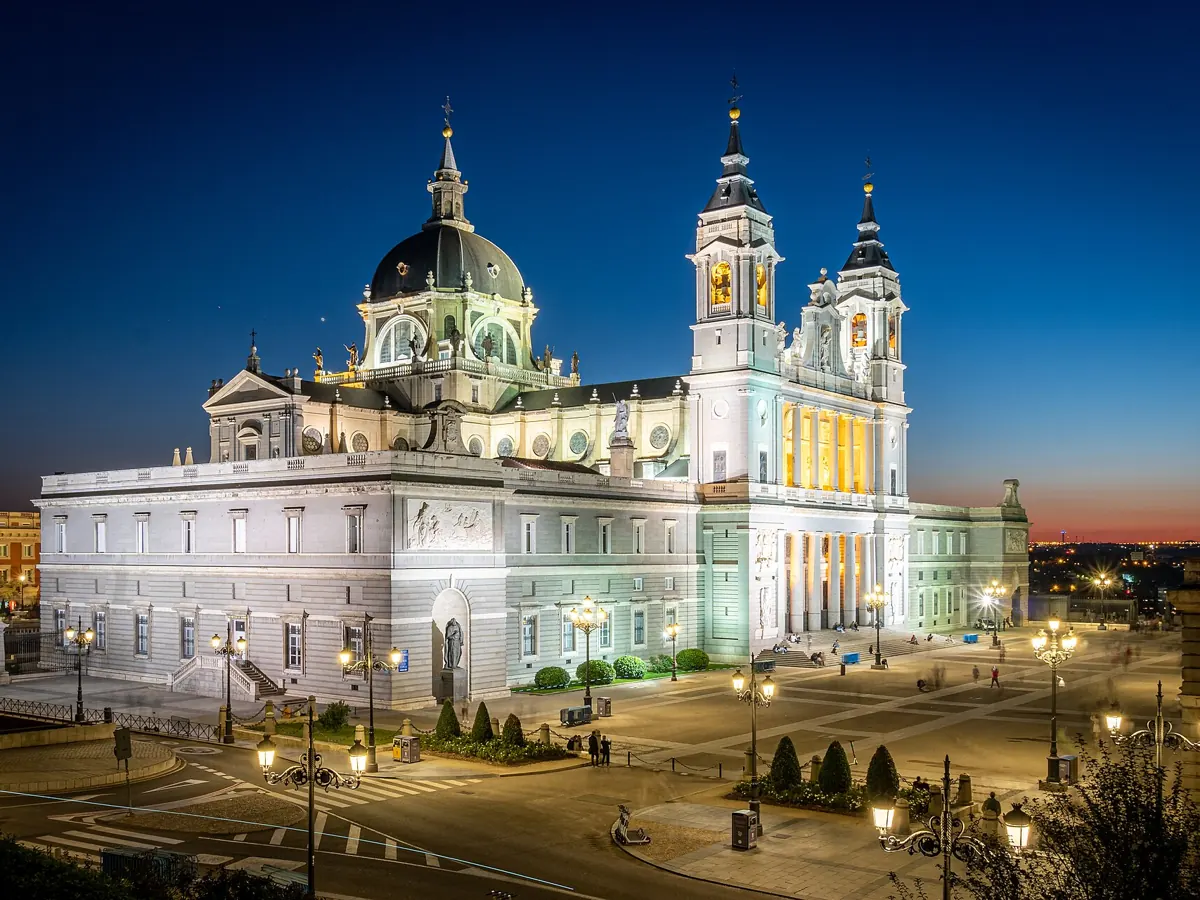
4. Almudena Cathedral
Free entry; museum and dome, paid
Calle de Bailén, 10
11:45 · 30 min
Madrid's cathedral, opposite the palace, took over a century to finish: it was started in 1883 and consecrated in 1993. The exterior is neoclassical, matching the palace; the interior is neo-Gothic, with brightly painted ceilings that surprise almost everyone.
Tip: The neo-Romanesque crypt has its own entrance on Cuesta de la Vega. If you want views, the cathedral museum includes a climb up to the dome, with the palace and Casa de Campo at your feet.
Next stop: 8 min walk (0.6 km)
Day 1 · Midday
5. Mercado de San Miguel
Free entry
Plaza de San Miguel, s/n
12:30 · 1 h
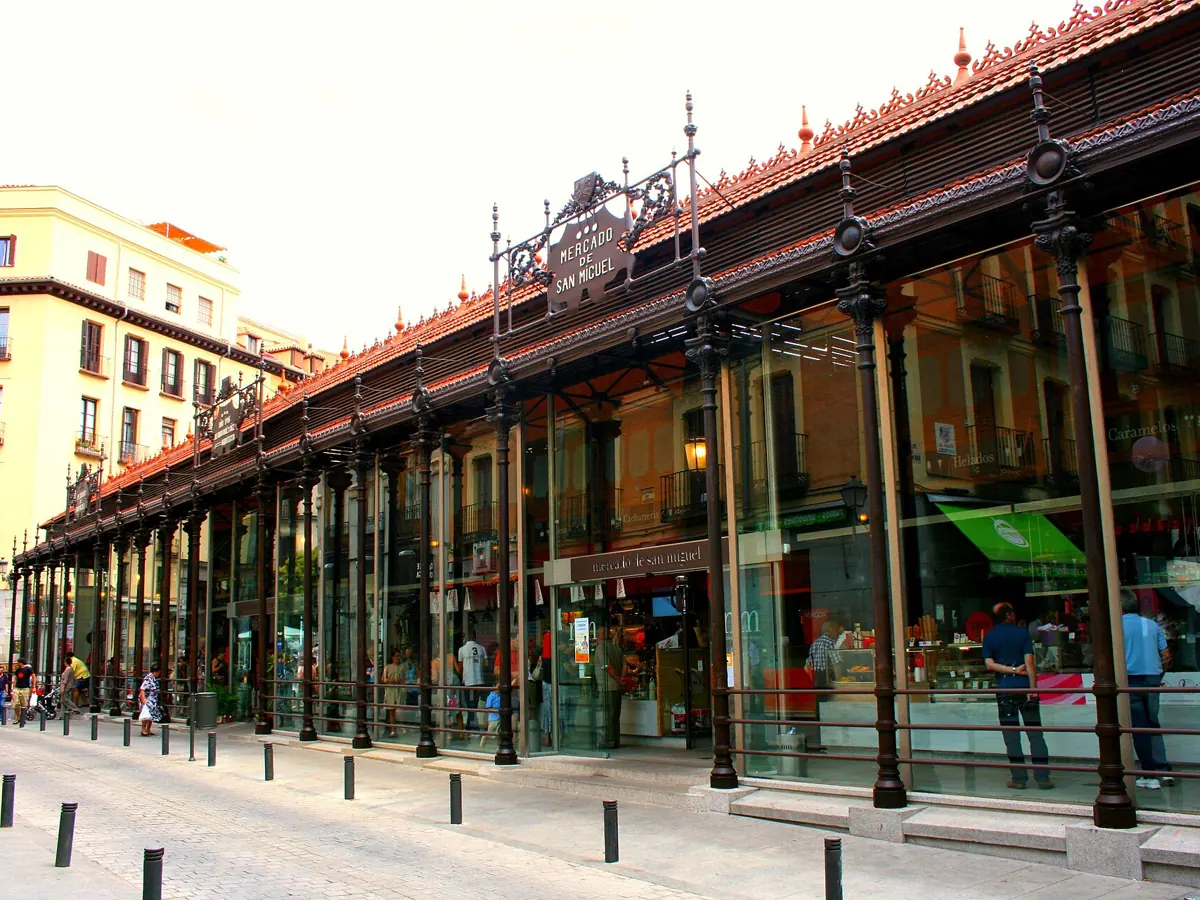
An early 20th-century iron and glass market next to Plaza Mayor, now converted into a gastronomic market: oysters, croquettes, ham, vermouth and small plates to nibble on from stall to stall.
Tip: It is convenient but expensive and gets crowded at midday. If you prefer to sit down, the streets between Plaza Mayor and Sol are full of traditional tapas bars.
Next stop: 12 min walk (0.9 km)
Day 1 · Afternoon
6. Barrio de las Letras
Free
Plaza de Santa Ana
13:45 · 45 min
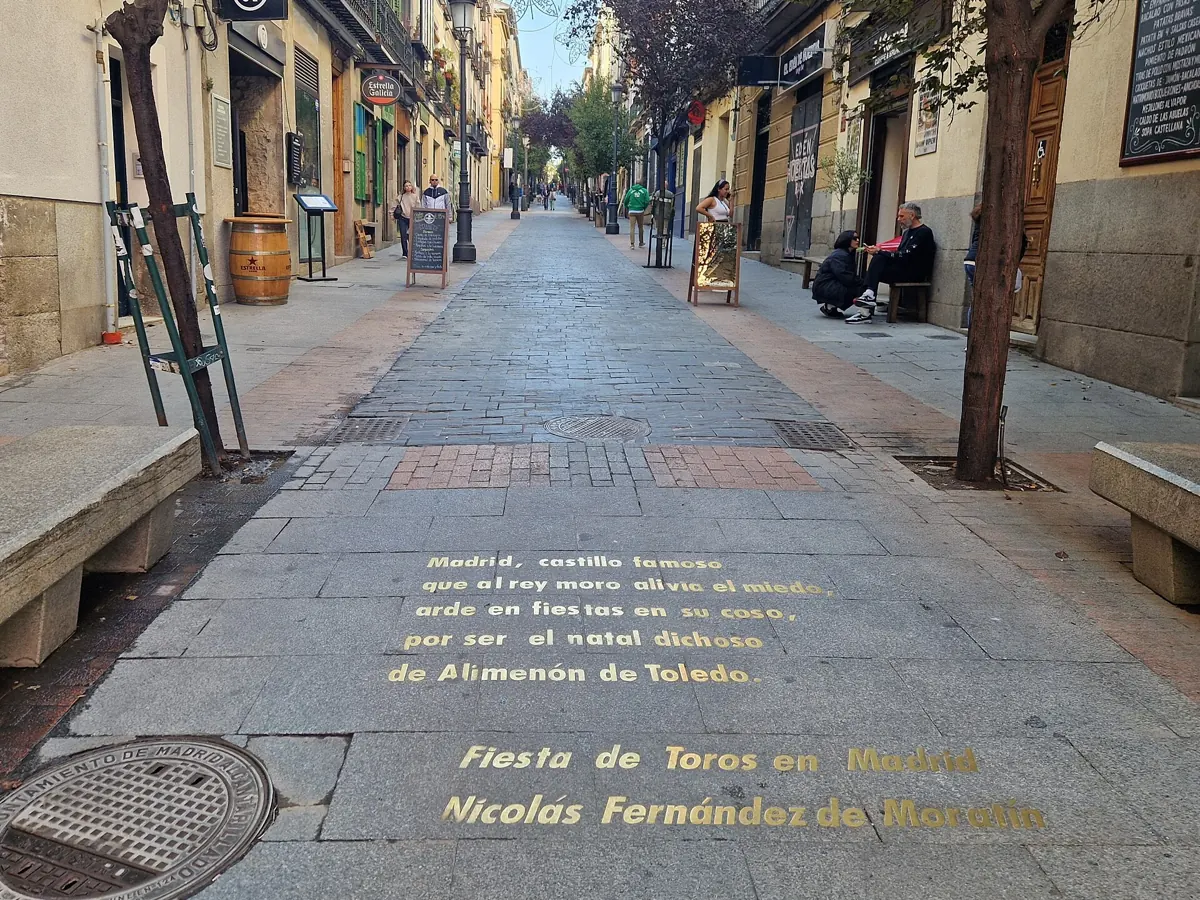
Cervantes, Lope de Vega, Quevedo and Góngora lived here. From Plaza de Santa Ana, Calle de las Huertas heads down towards the Prado with verses by classic authors written on the ground. Lope de Vega's house is on Calle Cervantes, and Cervantes' remains are in the Convento de las Trinitarias.
Tip: Walk down Calle de las Huertas looking at the ground: every few metres there is a quote in golden letters. The Lope de Vega House Museum requires booking; check their website.
Next stop: 15 min walk (1.1 km)
7. Prado Museum
15 €
Paseo del Prado, s/n
14:45 · 2 h 30 min
Best to book a timed ticket
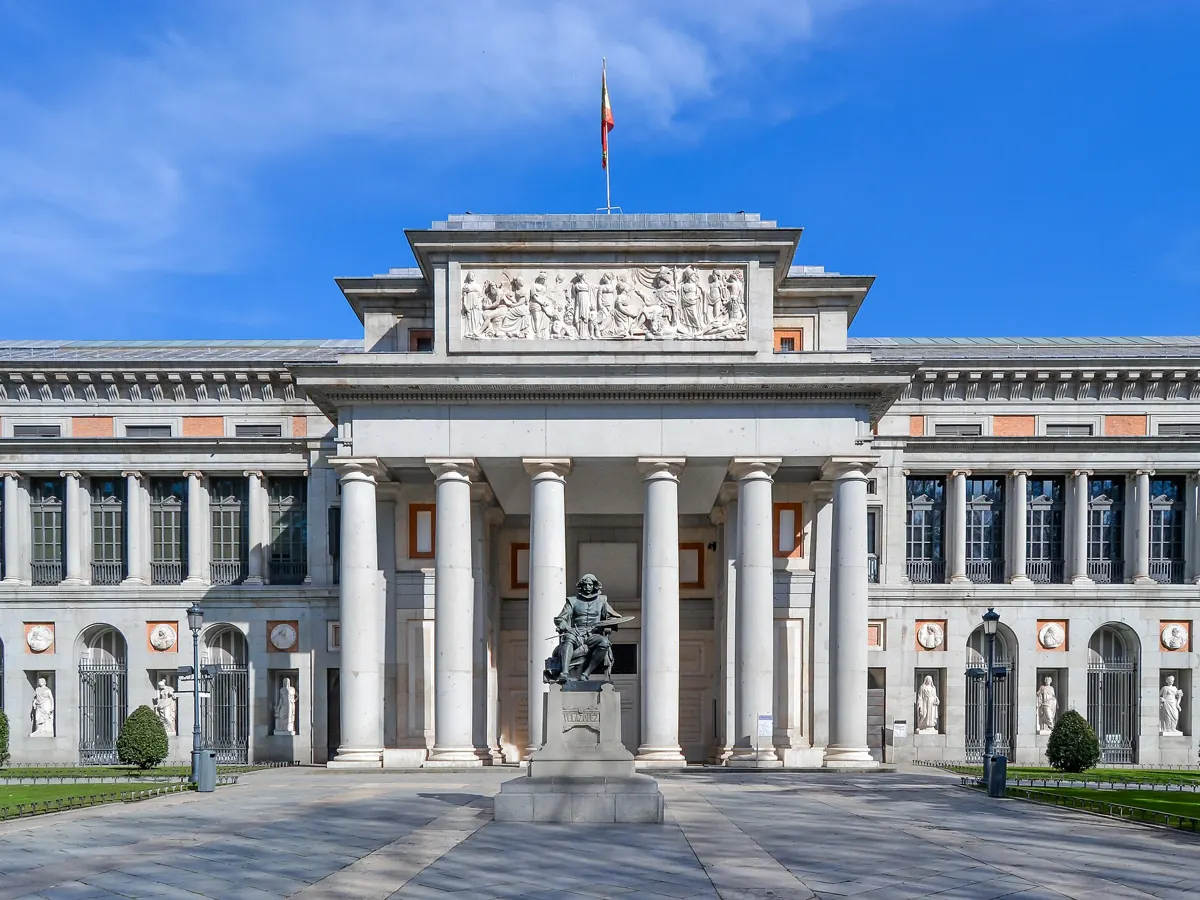
One of the world's great art museums: Velázquez's Las Meninas, Goya's Black Paintings and The Third of May 1808, Bosch's The Garden of Earthly Delights, plus El Greco, Titian and Rubens. Two and a half hours is enough for the essentials if you go in with a list.
Tip: Buy a timed ticket on the official website. It is open from Monday to Saturday from 10:00 to 20:00 and Sundays and bank holidays until 19:00. Entry is free from Monday to Saturday from 18:00 to 20:00 and on Sundays from 17:00 to 19:00, but expect queues.
Next stop: 17 min walk (1.3 km)
Day 1 · Sunset and night
8. Retiro Park
Free
Plaza de la Independencia, 7
At sunset · 45 min
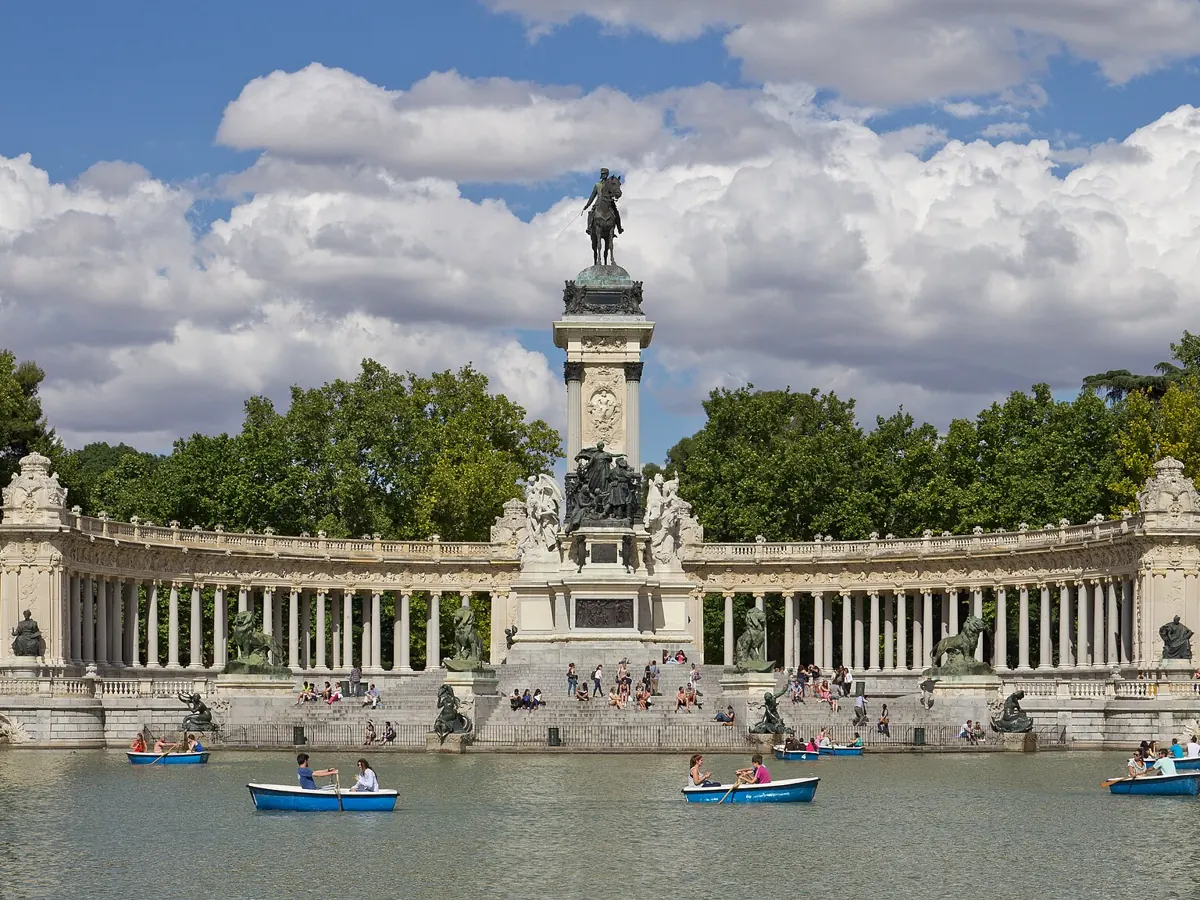
Madrid's great park, a former royal recreation garden and, since 2021, part of the Landscape of Light World Heritage site alongside the Paseo del Prado. The large lake, with its monument to Alfonso XII and rowing boats, is the perfect spot to watch the sun go down.
Tip: The Palacio de Cristal, five minutes from the lake, is free to visit. Leave through the Puerta de la Independencia to walk past the Puerta de Alcalá. The park closes during high wind alerts.
Next stop: 23 min walk (1.7 km)
9. Cibeles and Gran Vía
Free
Calle de Alcalá, 39
19:00 · As long as you like
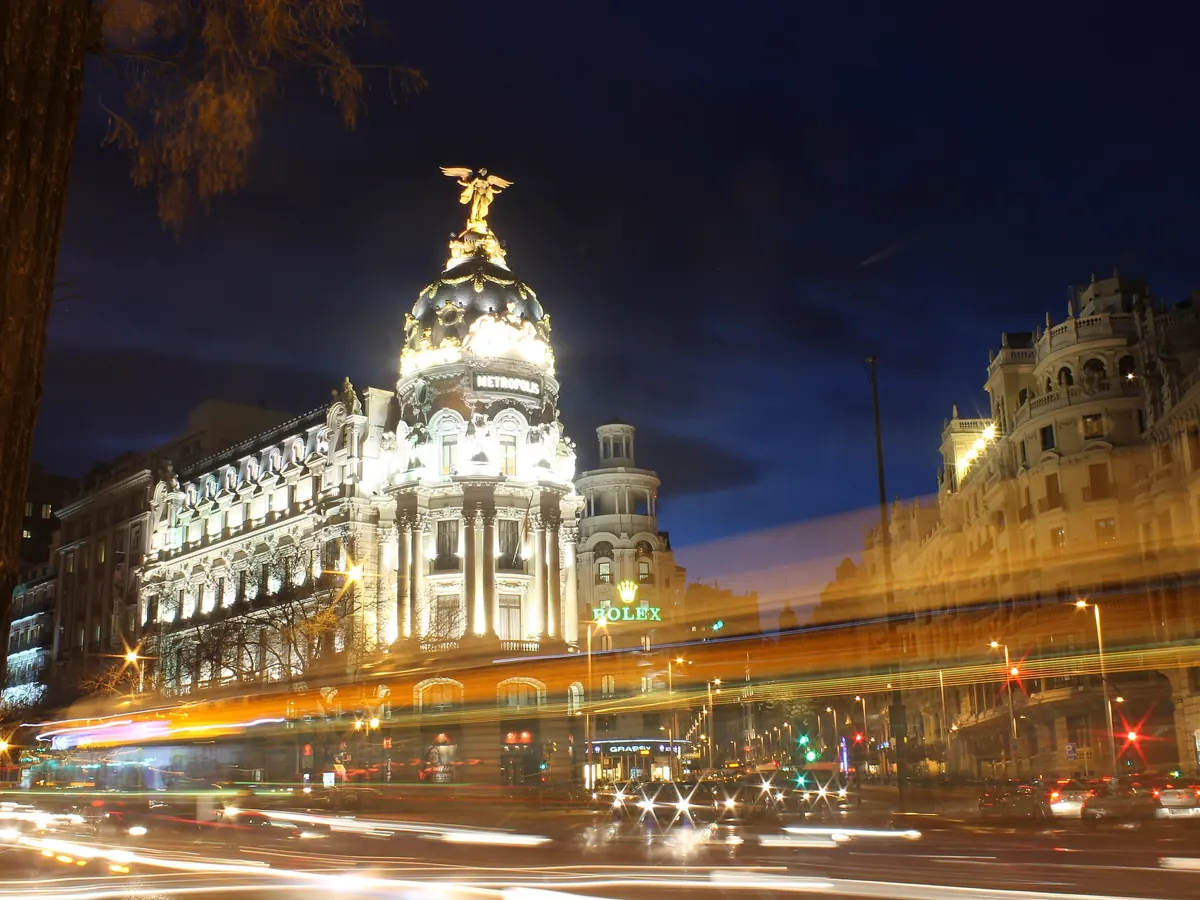
The Cibeles fountain, opposite the former Palacio de Comunicaciones (now the City Hall), and the Metrópolis building, with its dome and golden winged statue, mark the start of Gran Vía: the avenue of cinemas, theatres, and early 20th-century buildings, which fills with light at night.
Tip: Walk up Gran Vía to Callao to see the Telefónica building and the Schweppes neon sign. For dinner, Chueca and Malasaña are just a stone's throw away, to the right of the avenue.
Day 2
Guernica, El Rastro and Sunset at Debod
Designed for a Sunday, the day of El Rastro. If it is a Saturday, swap the market for a walk around the corralas of Lavapiés.
The day at a glance
Day 2 · Morning
1. Reina Sofía Museum
12 €
Calle de Santa Isabel, 52
10:00 · 2 h
Best to book a timed ticket
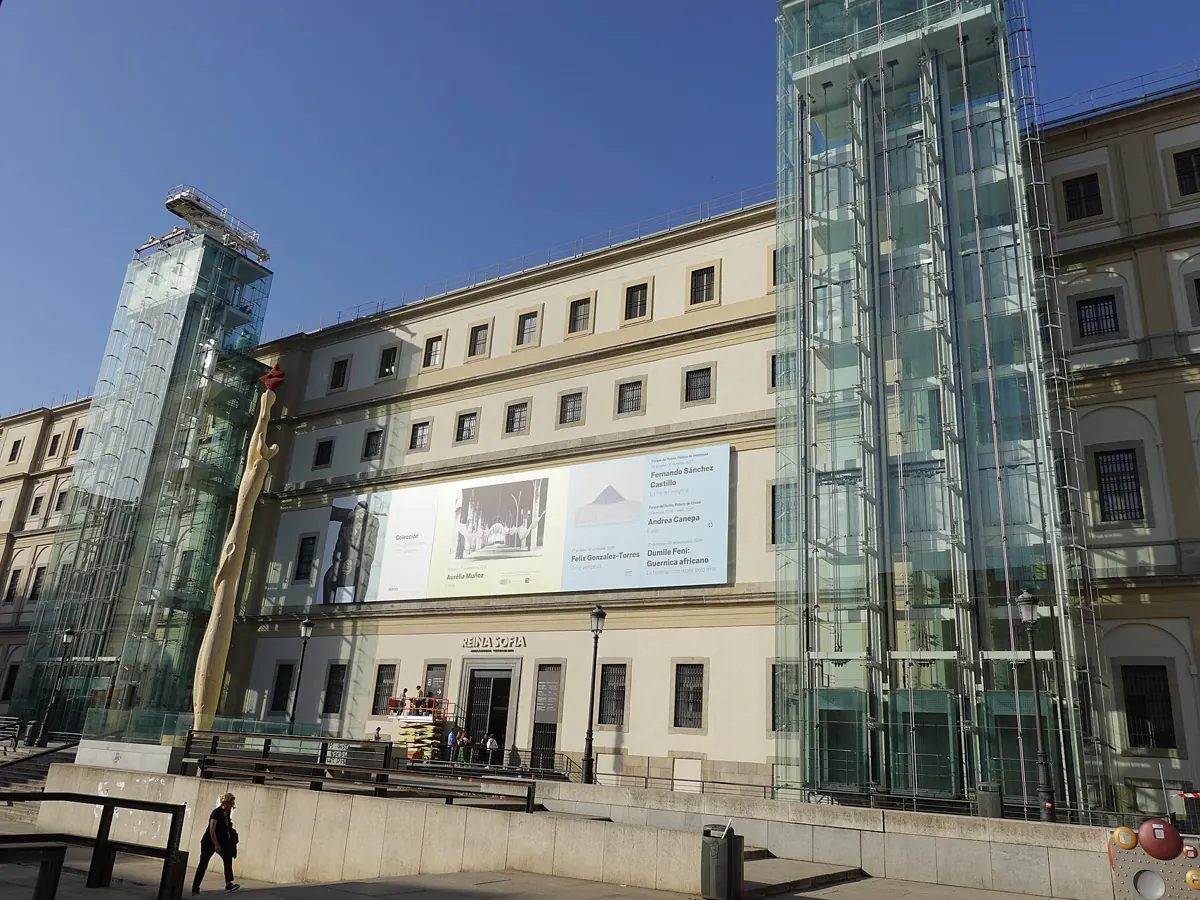
The 20th-century art museum, housed in the former General Hospital with its glass lifts and the Jean Nouvel extension. Its most famous room holds Picasso's Guernica, and the collection continues with Dalí, Miró, Juan Gris, and the Spanish avant-garde.
Tip: Closed on Tuesdays. On Sundays it opens from 10:00 to 14:30 and entry is free from 12:30; on other days, from 19:00 to 21:00. Head straight to the second floor if you only want to see Guernica and its context.
Next stop: 10 min walk (0.8 km)
2. Lavapiés
Free
Plaza de Lavapiés
12:15 · 20 min
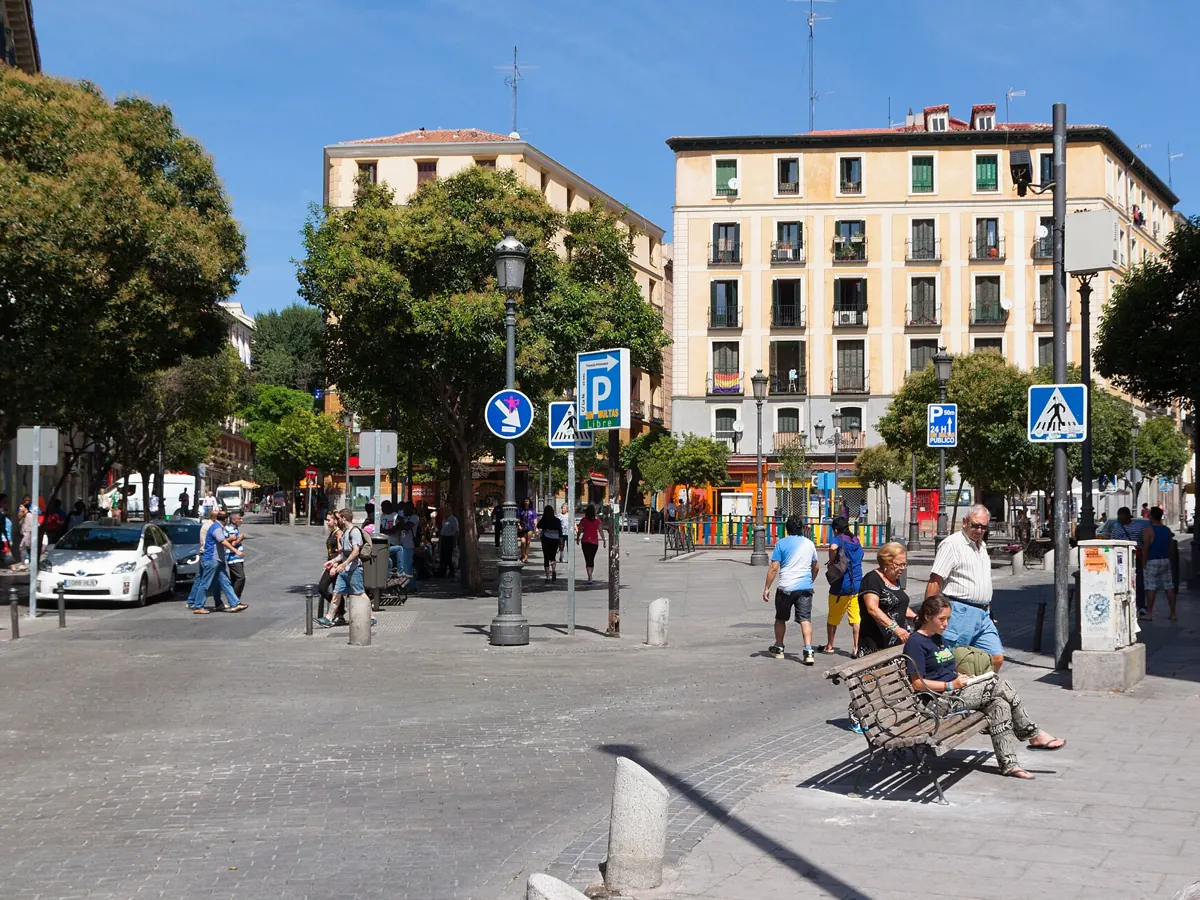
Madrid's most diverse neighbourhood: a former Jewish quarter, the birthplace of the traditional Madrilenian, and now home to residents from all over the world. Steep streets, corralas with continuous balconies, and theatres like the Valle-Inclán, right on the square.
Tip: Walk up Calle Mesón de Paredes to see the corrala on the corner of Sombrerete, the most photographed in the neighbourhood.
Next stop: 16 min walk (1.2 km)
Day 2 · Midday
3. El Rastro
Free
Plaza de Cascorro
12:50 · 1 h
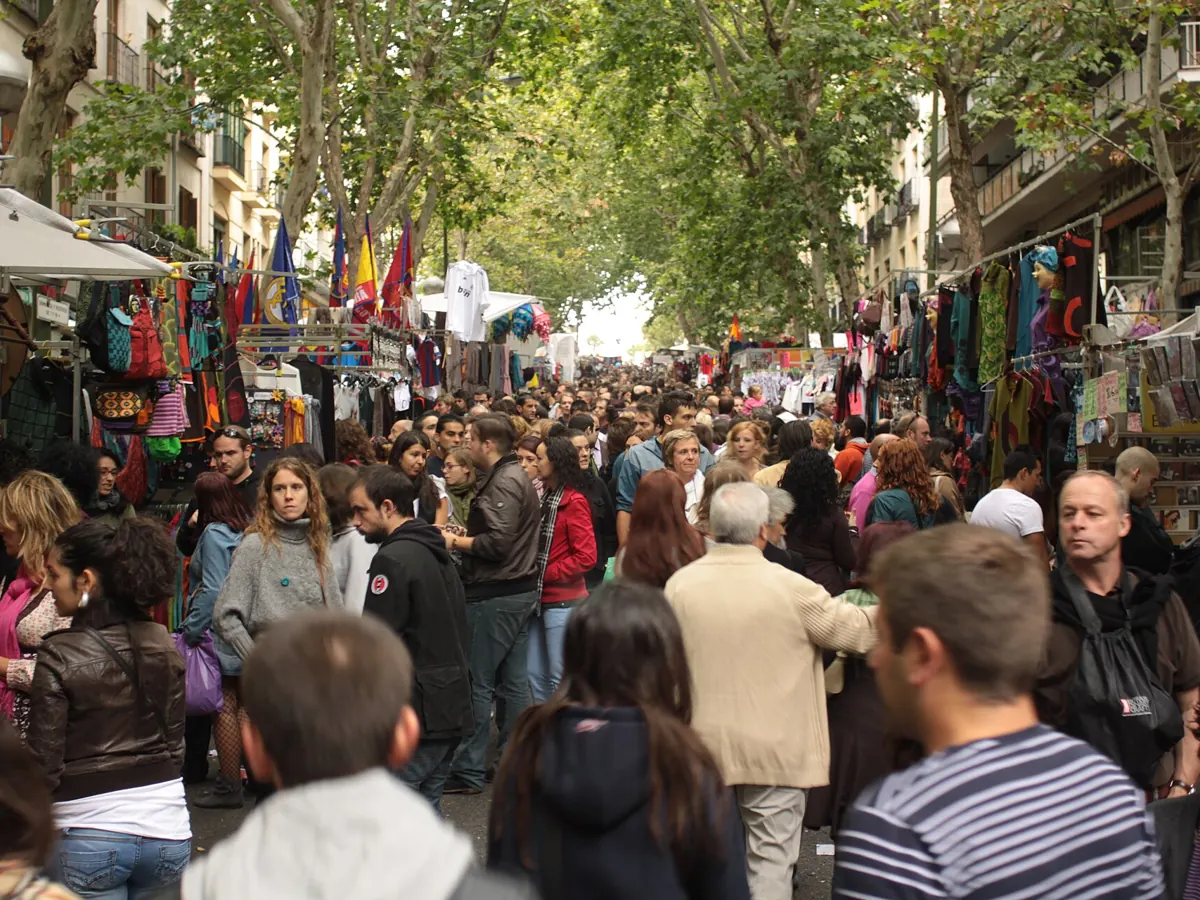
Spain's most famous flea market: hundreds of stalls selling clothes, antiques, records, books, and quirky items, stretching down from Plaza de Cascorro along Ribera de Curtidores. More than just shopping, people come to browse and mingle with the locals.
Tip: Only on Sundays and public holidays, from 9:00 to 15:00. Wear your backpack on your front: there are many pickpockets. The antique shops on the side streets are also open during the week.
Next stop: 8 min walk (0.6 km)
4. La Latina: Cava Baja and Plaza de la Paja
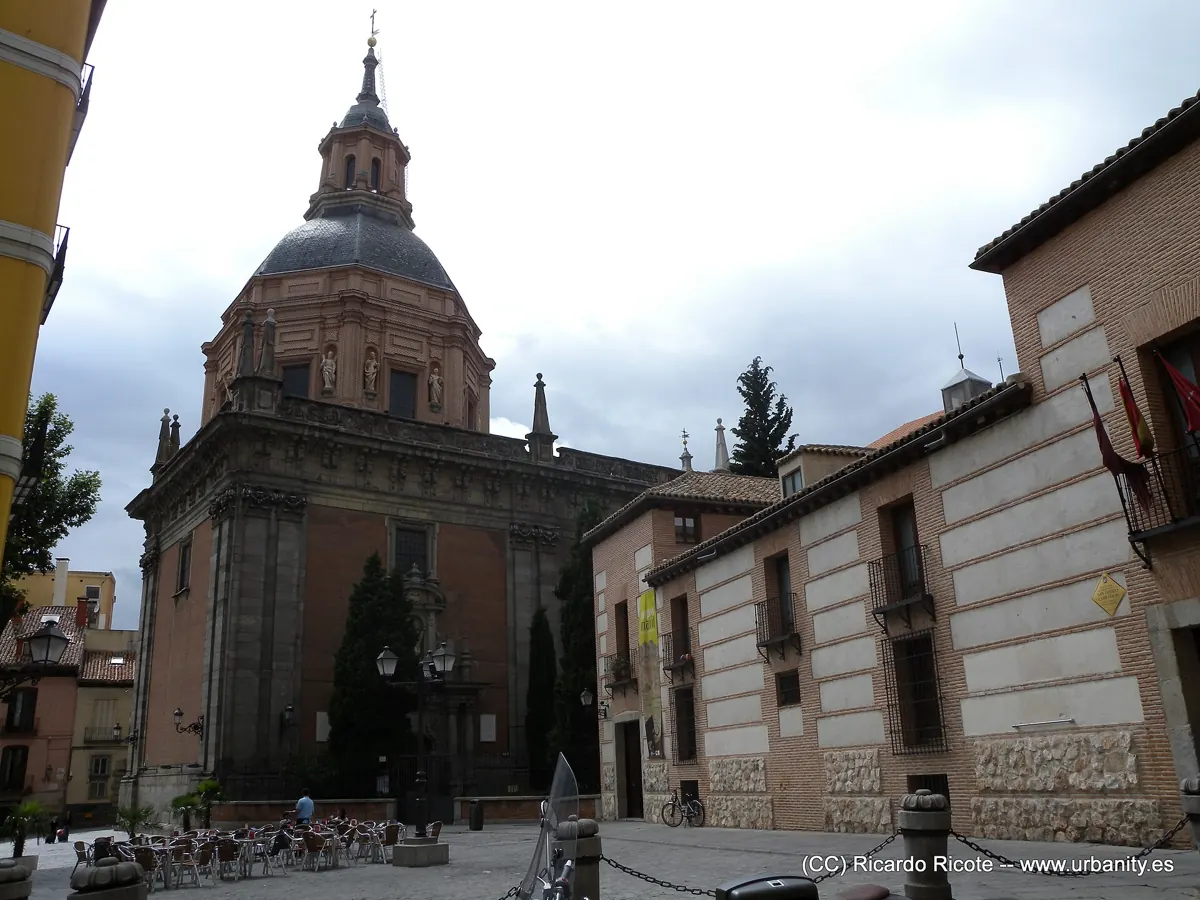
Free
Plaza de la Paja
14:00 · 1 h 30 min
Madrid's oldest neighbourhood, built on the medieval layout. Cava Baja follows the moat of the old city wall and is packed with taverns and tapas bars; Plaza de la Paja, with the Church of San Andrés and the Capilla del Obispo, was the city centre before the Plaza Mayor existed.
Tip: On Sundays, after El Rastro, half of Madrid goes for a beer around here: arrive early or eat a bit later. Tapas are ordered at the bar and eaten in the surrounding streets.
Next stop: 7 min walk (0.6 km)
Day 2 · Afternoon
5. Royal Basilica of San Francisco el Grande
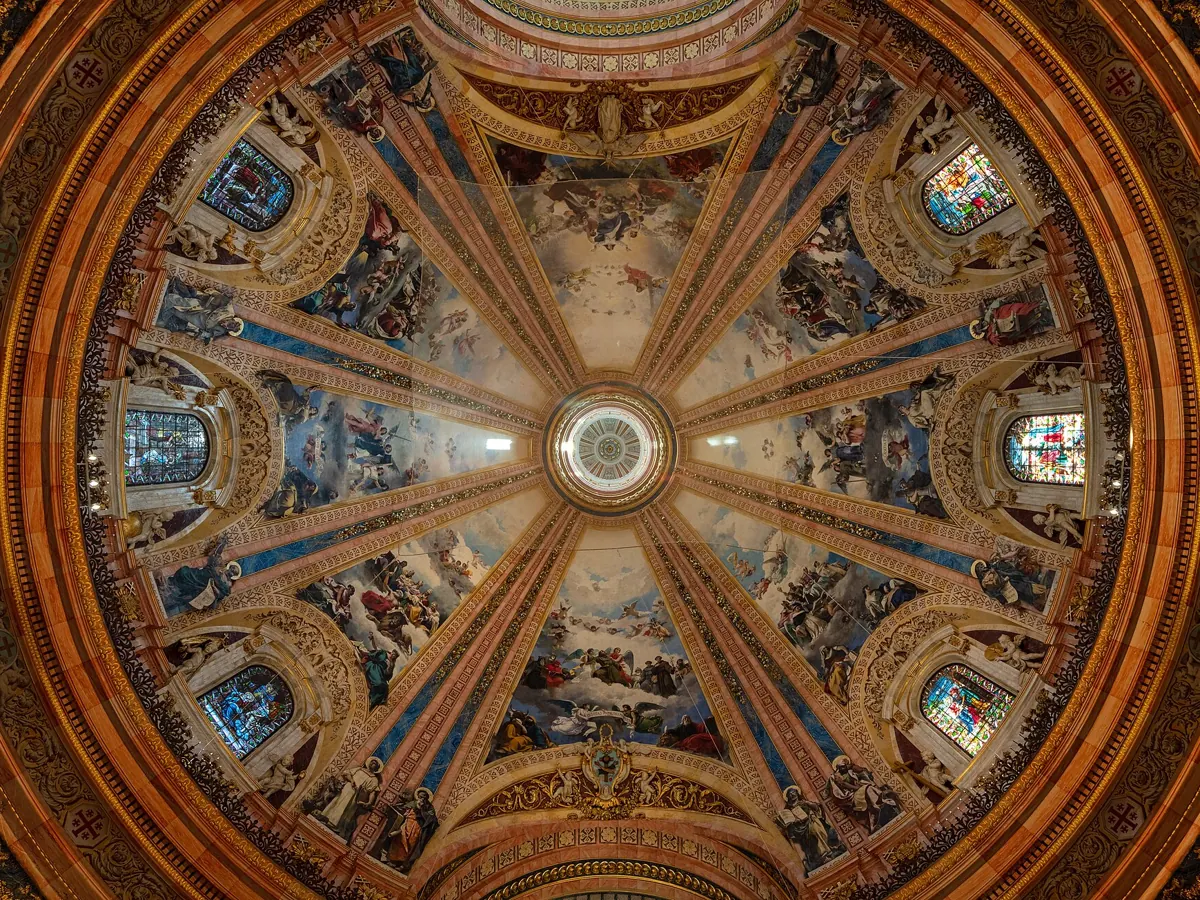
Paid visit, from Tuesday to Saturday
Calle de San Buenaventura, 1
16:00 · 30 min
An 18th-century basilica with one of the largest circular domes in Europe. Inside, it houses paintings by Goya, including one from his youth, and Renaissance choir stalls brought from a monastery in Segovia.
Tip: Tourist visits are from Tuesday to Saturday and are paused during services: if it is a Sunday, you will only see the facade and the square. Check the opening times before you go.
Next stop: 4 min walk (0.3 km)
6. Las Vistillas
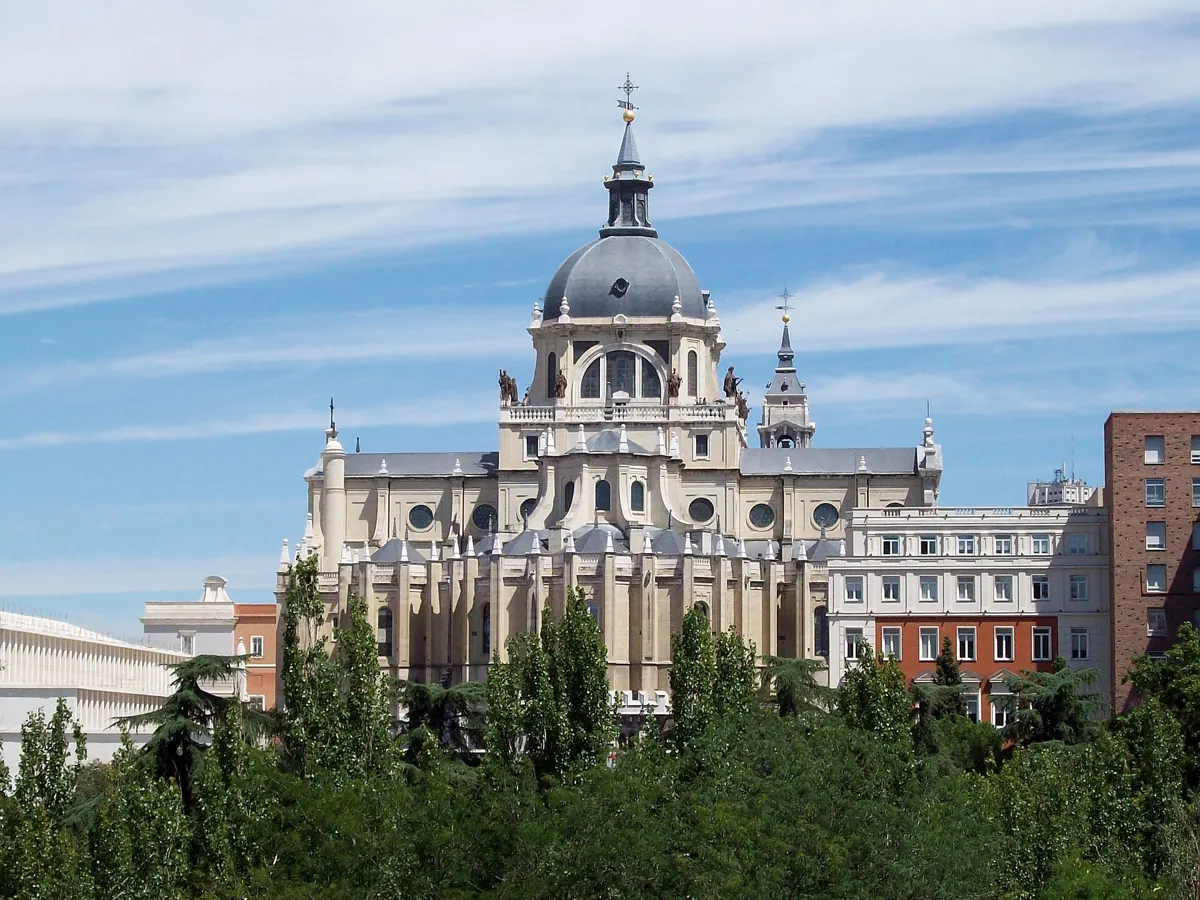
Free
Calle de Bailén
16:45 · 20 min
The gardens offering views of the western side of Madrid: the Almudena Cathedral, the Casa de Campo, and, on clear days, the Sierra de Guadarrama. Next to it, the Segovia Viaduct spans the street of the same name.
Tip: Cross the viaduct along Calle Bailén to reach the palace from the cathedral side: the walk to Plaza de España skirts the Sabatini Gardens.
Next stop: 19 min walk (1.4 km)
7. Plaza de España
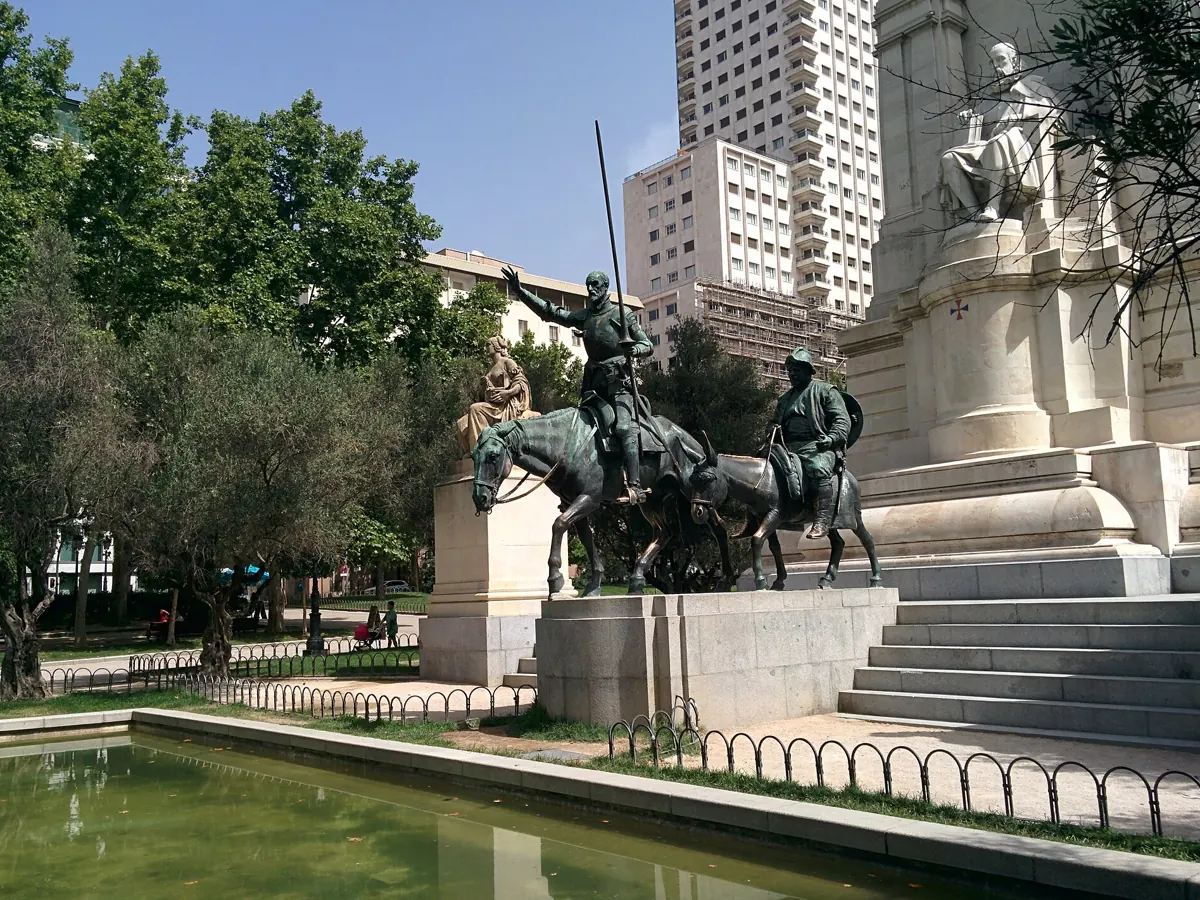
Free
Plaza de España
17:30 · 20 min
Redesigned in 2021, the square now links the Royal Palace and the Temple of Debod along a pedestrian promenade. In the middle stands the Cervantes monument with Don Quixote and Sancho Panza; around it rise the Edificio España and the Torre de Madrid, the skyscrapers the city built in the fifties.
Tip: From the square, follow Calle Ferraz uphill: the Temple of Debod park is five minutes away.
Next stop: 11 min walk (0.8 km)
Day 2 · Sunset and night
8. Temple of Debod
Free
Calle de Ferraz, 1
At sunset · 45 min
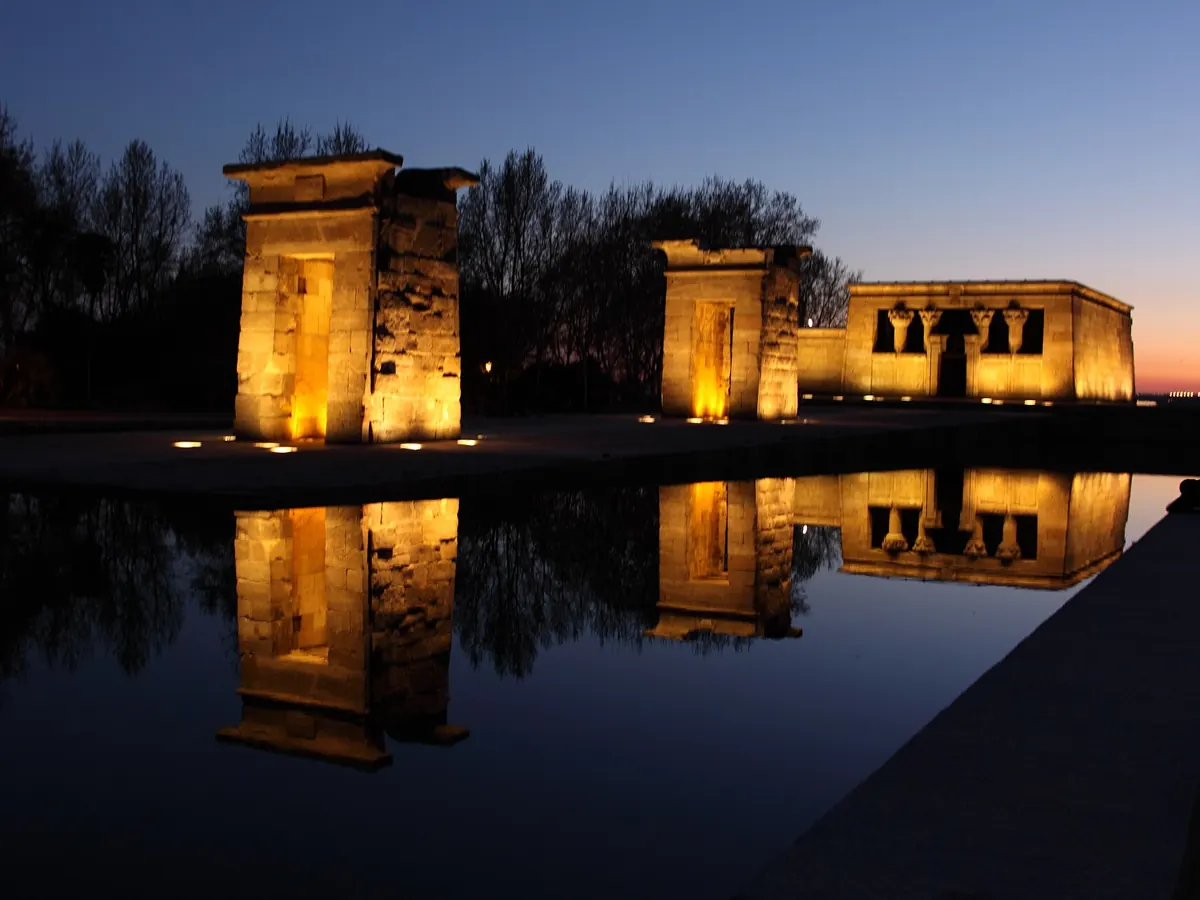
A 2nd-century BC Egyptian temple, gifted by Egypt to Spain for its help in saving the Nubian temples from the waters of the Aswan Dam. It was rebuilt stone by stone in this park in 1972 and is Madrid's most popular viewpoint at sunset.
Tip: The interior can be visited for free from Tuesday to Sunday, ideally booking ahead on the City Council's website as capacity is small. Outside, people come to see the temple's reflection in the water and the sky over the Casa de Campo.
Day 3
The Thyssen, the Salamanca Neighbourhood and Malasaña
The third great museum on the Paseo del Prado, 19th-century bourgeois Madrid, and the neighbourhoods with the best nightlife.
The day at a glance
Day 3 · Morning
1. Thyssen-Bornemisza National Museum
14 €
Paseo del Prado, 8
10:00 · 2 h
Best to book a timed ticket
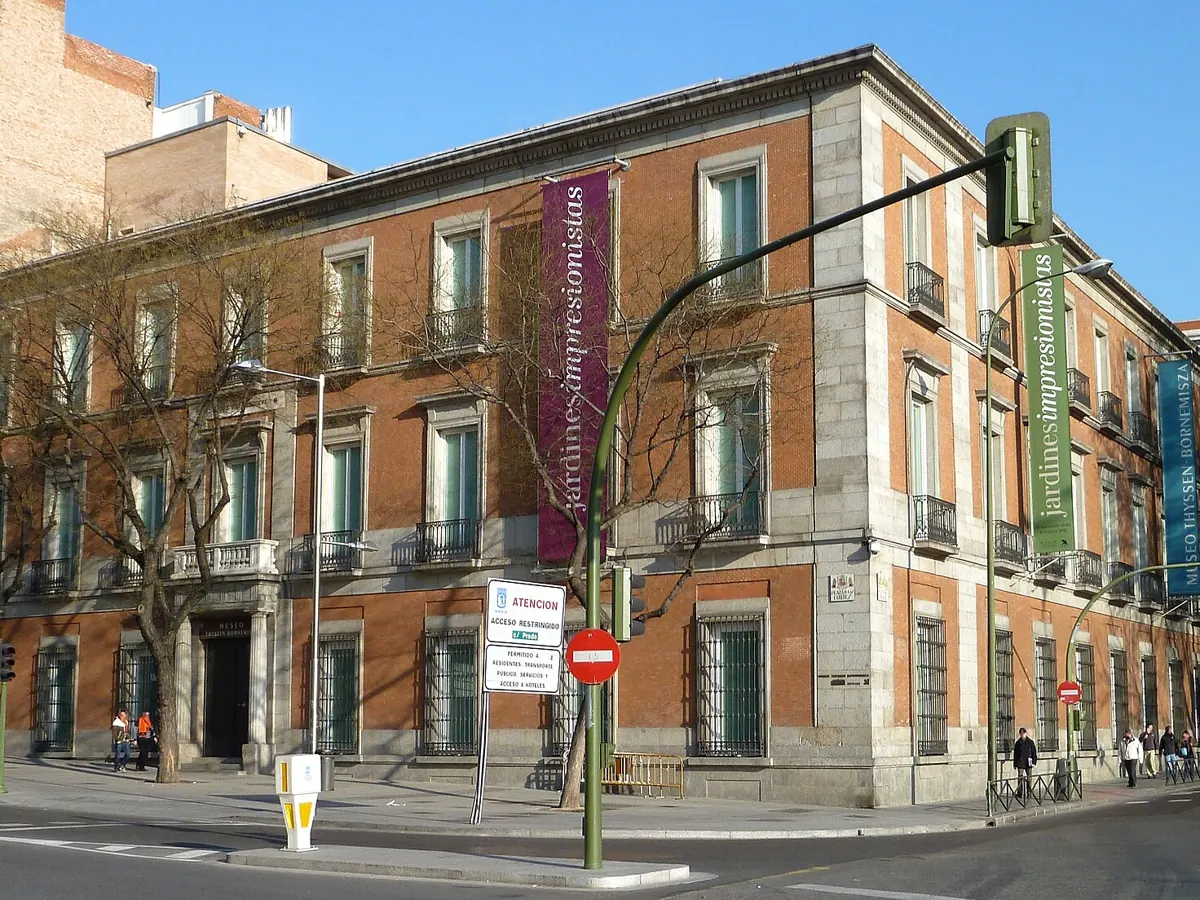
The private collection of the Thyssen-Bornemisza barons, bought by the State in 1993. It fills the gaps in the Prado: Italian and Flemish primitives, Impressionists, German Expressionists, and American art, from Van Eyck and Caravaggio to Monet, Van Gogh, Hopper, and Lichtenstein.
Tip: Open Tuesday to Friday and Sunday from 10:00 to 19:00, and Saturdays until 23:00. On Mondays it only opens from 12:00 to 16:00, with free entry to the collection: if your third day is a Monday, change your morning schedule.
Next stop: 18 min walk (1.3 km)
2. National Archaeological Museum
3 €
Calle de Serrano, 13
12:30 · 1 h 30 min
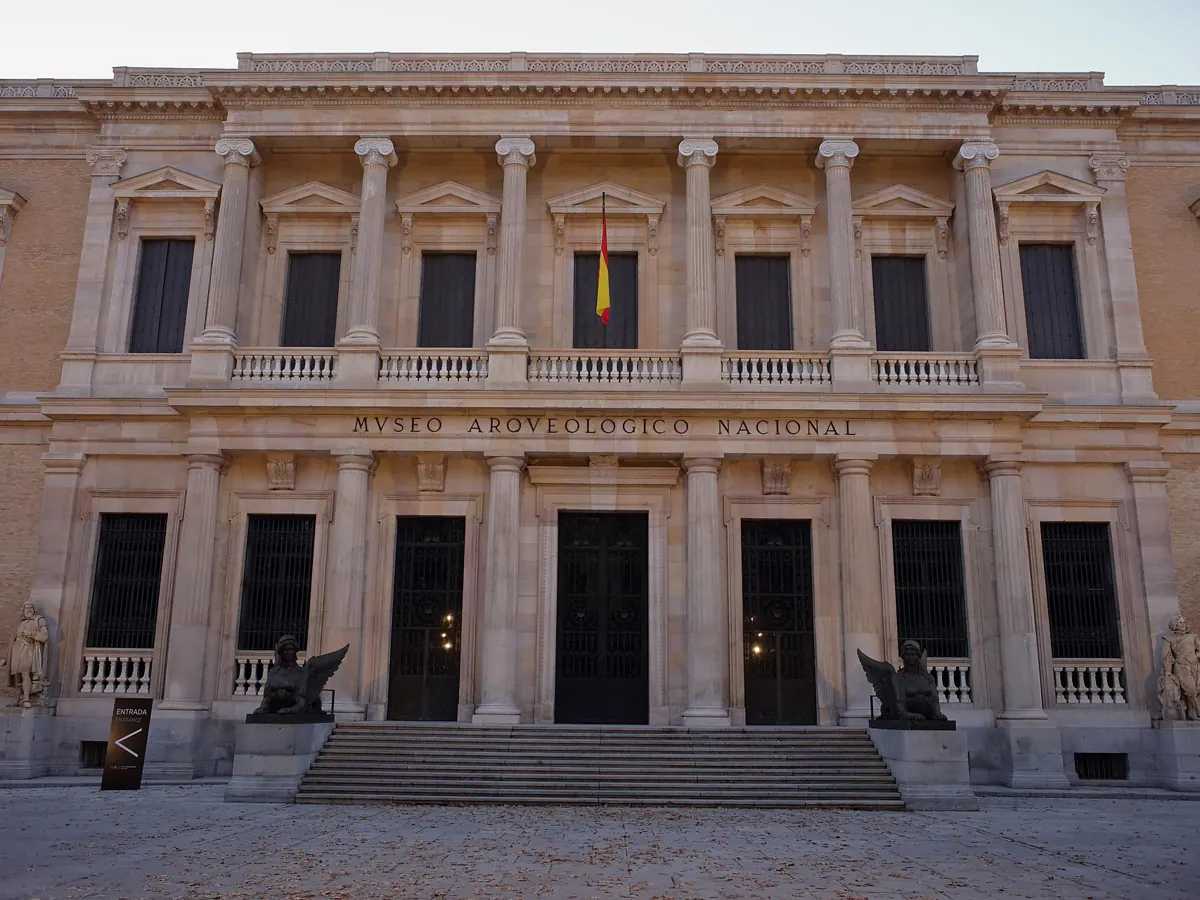
From prehistory to the 19th century in a palace shared with the National Library. Here you will find the Lady of Elche, the Lady of Baza, the Visigothic crowns of the Treasure of Guarrazar, and, in the garden, a replica of the painted ceilings of Altamira.
Tip: Closed on Mondays. Open Tuesday to Saturday from 9:30 to 20:00, and Sundays and bank holidays from 9:30 to 15:00. No booking required.
Next stop: 4 min walk (0.3 km)
Day 3 · Midday
3. Salamanca Neighbourhood
Free
Calle de Serrano esquina con Goya
14:15 · 1 h 15 min
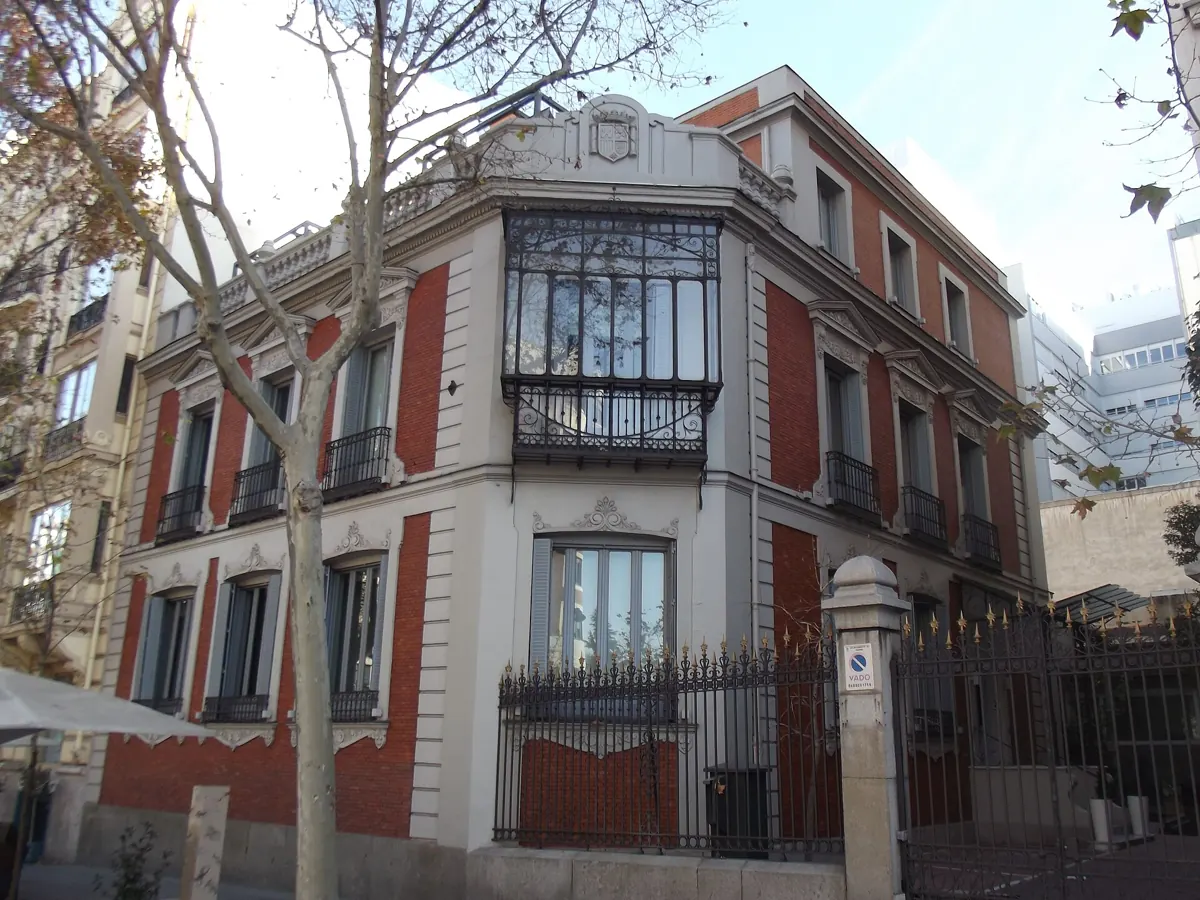
The grid extension laid out by the Marquis of Salamanca in the 19th century for the Madrid bourgeoisie: wide streets, mansions, grand doorways, and, on Serrano, Ortega y Gasset, and Goya, the major designer boutiques.
Tip: It is a great area for lunch: the streets perpendicular to Serrano have everything from market stalls to set menus. The Mercado de la Paz, on Calle Ayala, is one of the prettiest in the neighbourhood.
Next stop: 14 min walk (1.0 km)
Day 3 · Afternoon
4. Las Salesas and Church of Santa Bárbara
Free (during worship hours)
Calle del General Castaños, 2
15:45 · 20 min
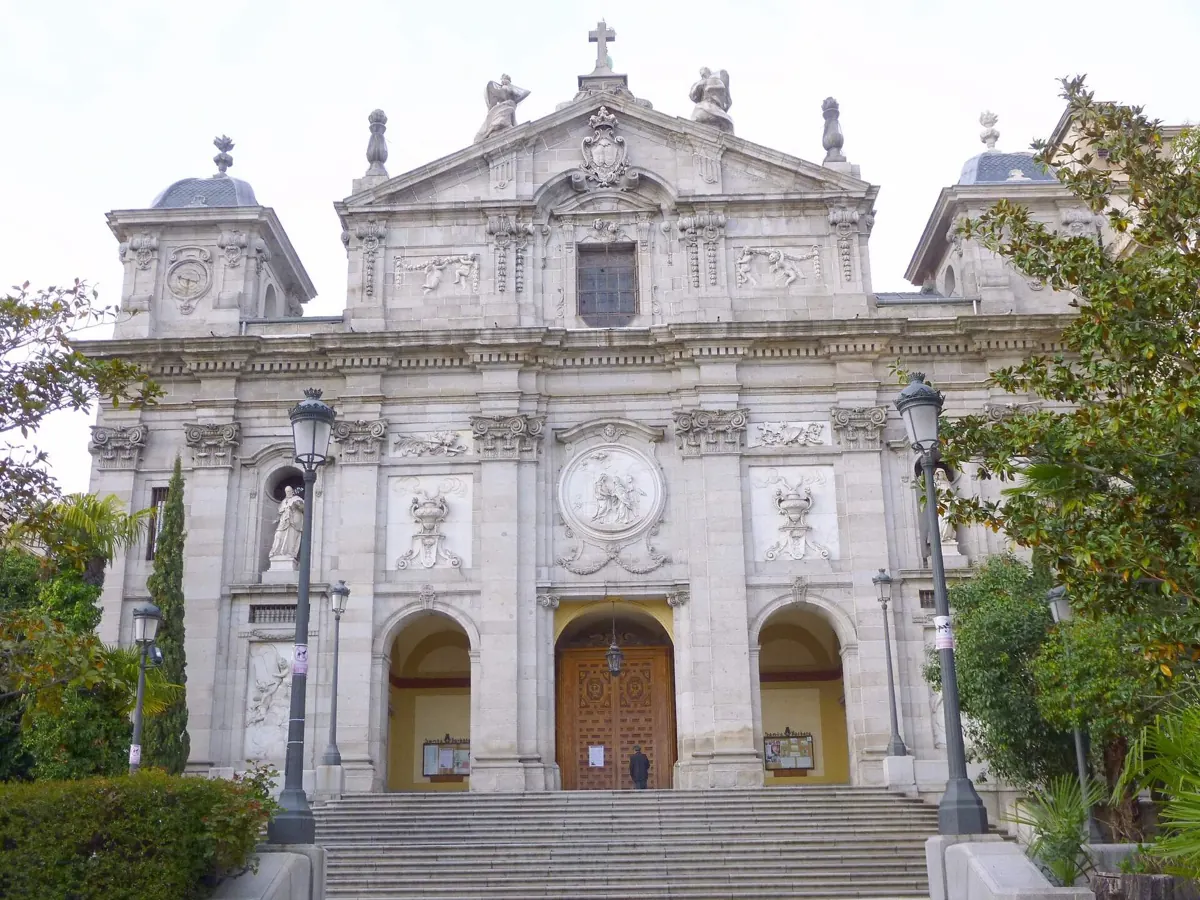
The church of the former Salesas Reales convent, founded in the 18th century by Queen Bárbara de Braganza. Inside are the tombs of her and her husband, Fernando VI. Surrounding it is the Salesas neighbourhood, full of small shops, bookshops and design studios.
Tip: You can enter during worship hours. Stroll along Calle Argensola and Calle Fernando VI to see the neighbourhood's modernist buildings, such as the Longoria Palace.
Next stop: 7 min walk (0.5 km)
5. Chueca
Free
Plaza de Chueca
16:30 · 30 min
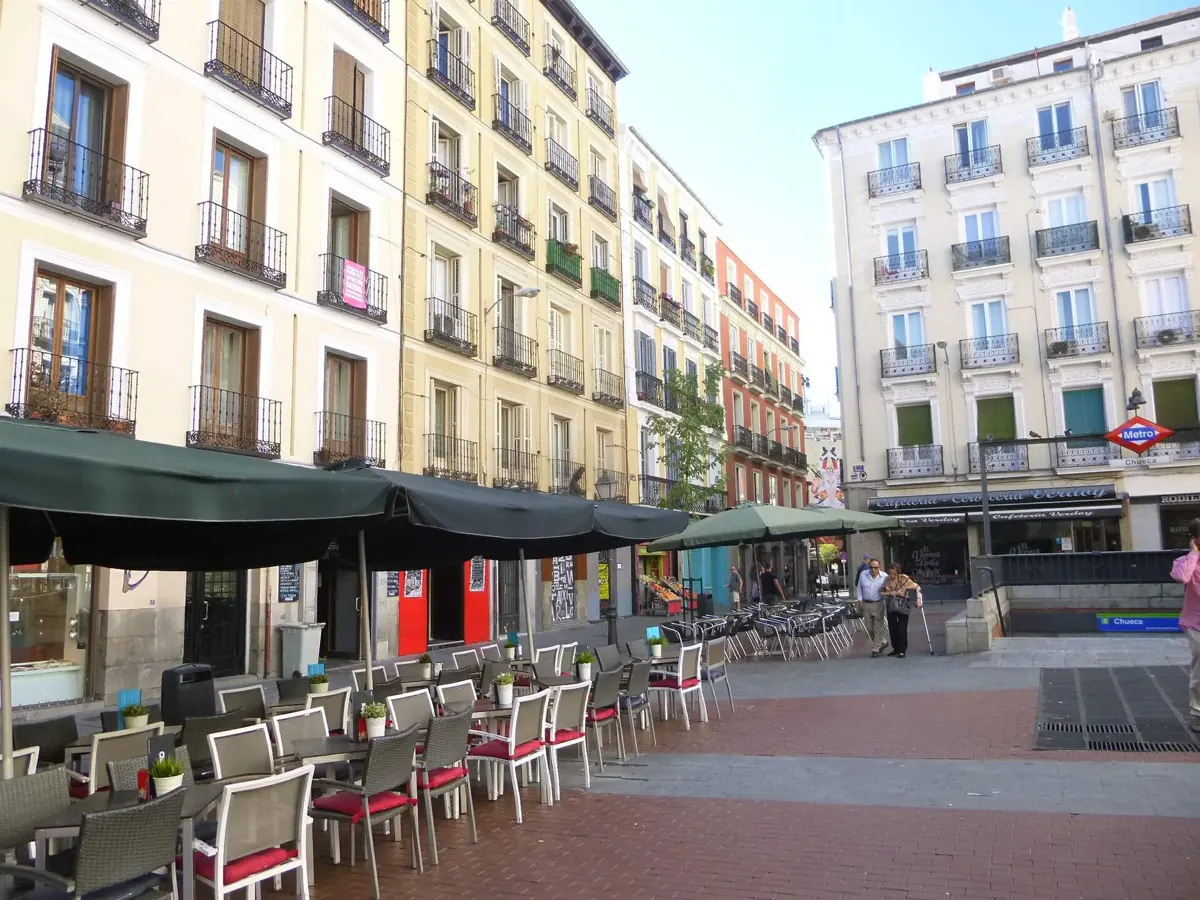
The neighbourhood that went from being run-down in the nineties to becoming Madrid's liveliest area and the heart of the LGBTQ+ community. Narrow streets, shops, terraces, and, in early July, the hub of the Pride celebrations.
Tip: The Mercado de San Antón, two streets away from the square, has a rooftop terrace. At night, the atmosphere shifts towards Calle Pelayo and Calle Libertad.
Next stop: 9 min walk (0.7 km)
6. Museum of Romanticism
Free until 30 November 2026; then 3 €
Calle de San Mateo, 13
17:10 · 1 h
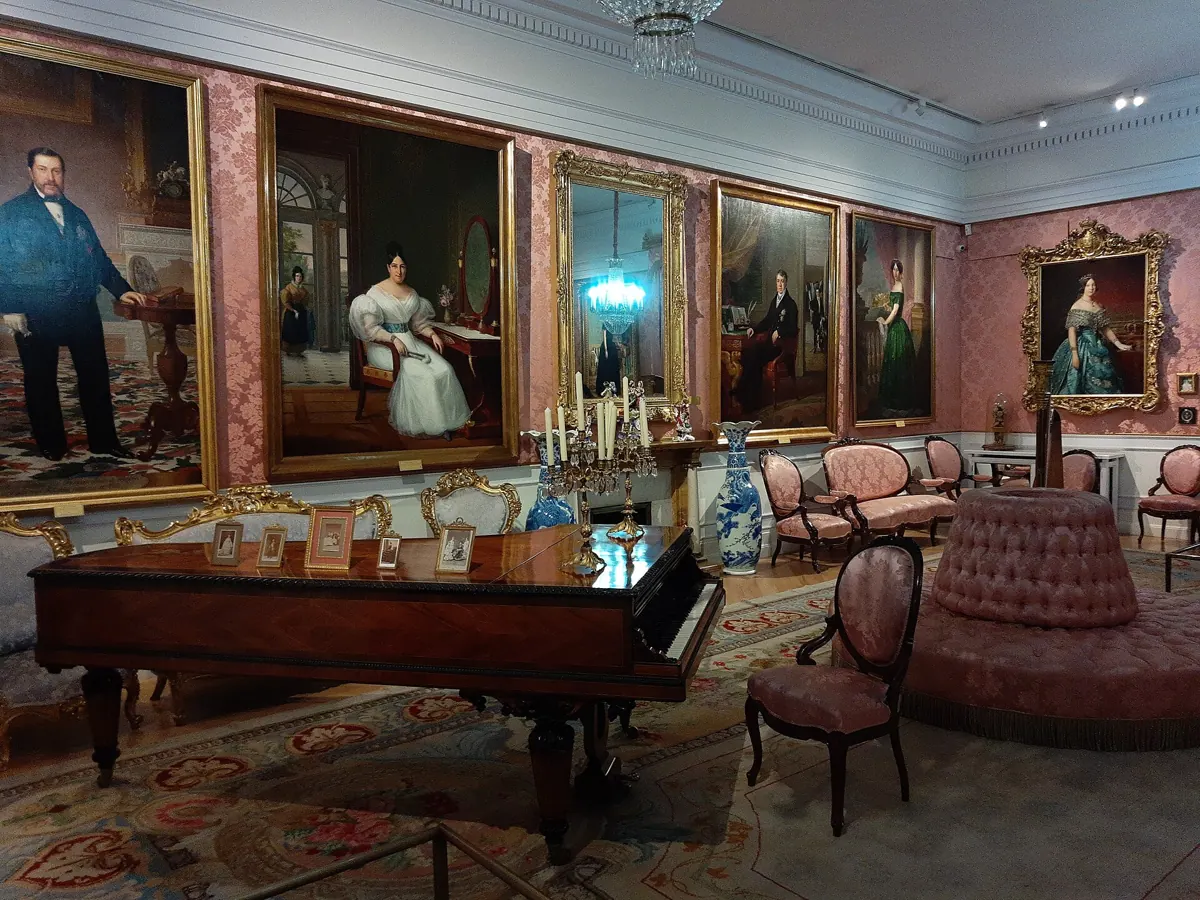
An 18th-century palace furnished like a 19th-century bourgeois home: drawing rooms, a dining room, a piano, fans, and portraits, including a painting by Goya. The inner garden is one of the most peaceful spots in the centre.
Tip: Closed on Mondays. From November to April, it is open Tuesday to Saturday from 9:30 to 18:30 and Sundays from 10:00 to 15:00. Some rooms are closed for refurbishment.
Next stop: 7 min walk (0.5 km)
Day 3 · Sunset and night
7. Malasaña and Plaza del Dos de Mayo
Free
Plaza del Dos de Mayo
18:30 · As long as you like
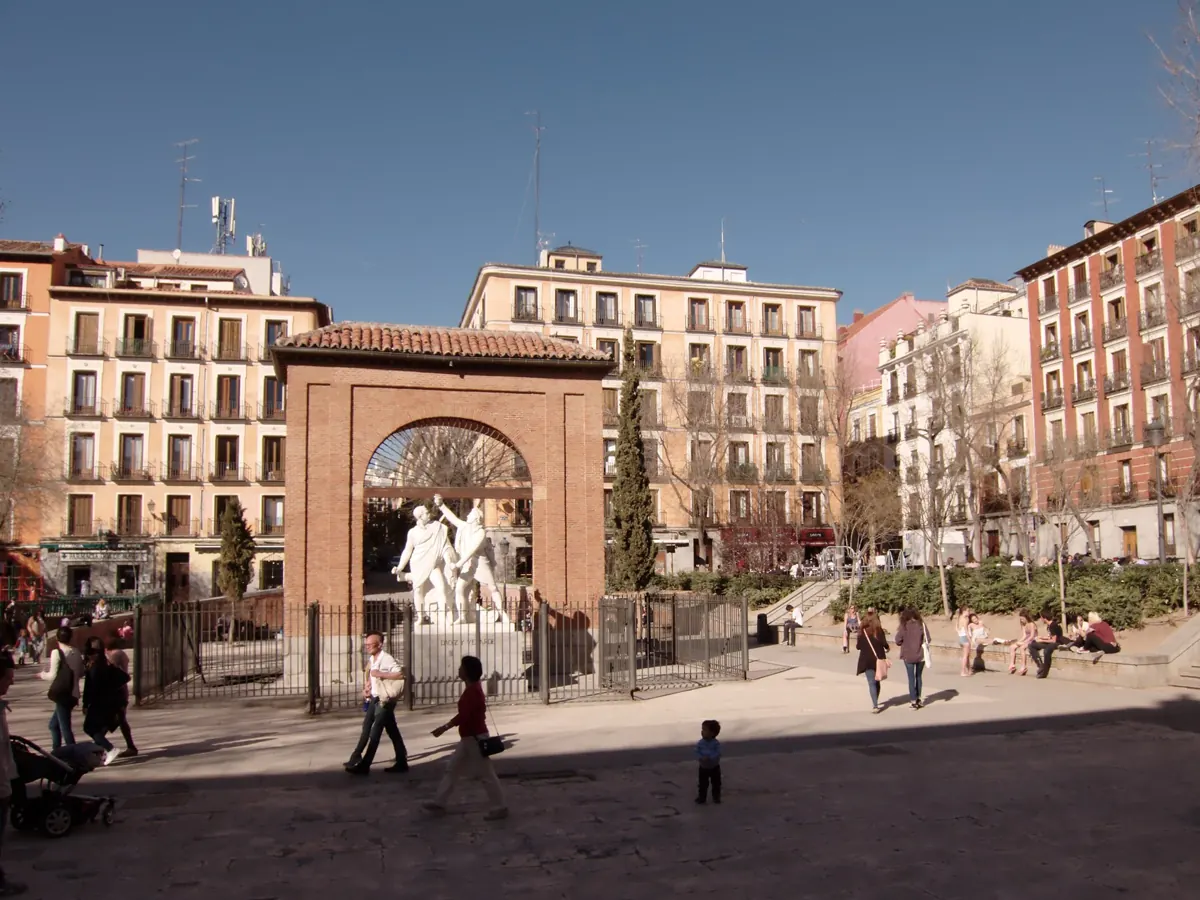
The neighbourhood of the Movida madrileña of the eighties, now full of bars, vintage shops and terraces. The square remembers the uprising of 2 May 1808 against Napoleon's troops: the arch is all that remains of the Monteleón barracks, where Daoíz and Velarde held out.
Tip: The bars are clustered along Calle San Vicente Ferrer, Calle Espíritu Santo, and Calle del Pez. It is a good place for dinner without booking.
If you have time to spare
- Bernabéu Tour. The renovated Real Madrid stadium, featuring a museum, changing rooms, and panoramic views from the top. Tickets from 37 € online; by metro, get off at Santiago Bernabéu.
- Lázaro Galdiano Museum. The collection of a great collector in his mansion in the Salamanca neighbourhood: from medieval enamels to Goya and Bosch.
- Cerralbo Museum. A 19th-century palace with all its furniture and collections exactly as the Marquis of Cerralbo left them, just a stone's throw from Plaza de España.
More itineraries in Madrid
Photos from Wikimedia Commons: Puerta del Sol (Matt Joseph, CC BY-SA 4.0); Plaza Mayor (Carlos Delgado, CC BY-SA 3.0); Royal Palace (Basilio, CC BY-SA 4.0); Almudena Cathedral (Fernando, CC BY-SA 4.0); Mercado de San Miguel (Juan Antonio Flores Segal from Madrid (Spain), CC BY 2.0); Barrio de las Letras (Gerda Arendt, CC0); Prado Museum (Emilio J. Rodríguez Posada, CC BY-SA 2.0); Retiro Park (Carlos Delgado, CC BY-SA 3.0); Cibeles and Gran Vía (El fosilmaníaco, CC BY-SA 3.0); Reina Sofía Museum (Joseolgon, CC BY 4.0); Lavapiés (Liberaler Humanist, CC BY-SA 3.0); El Rastro (Javier Perez Montes, CC BY-SA 4.0); La Latina: Cava Baja and Plaza de la Paja (Ricardo Ricote Rodríguez from Madrid, España, CC BY 2.0); Royal Basilica of San Francisco el Grande (Diego Delso, CC BY-SA 4.0); Las Vistillas (Luis García (Zaqarbal), CC BY-SA 3.0); Plaza de España (Leeturtle, CC BY-SA 3.0); Temple of Debod (Adrian Diez, CC BY-SA 3.0); Thyssen-Bornemisza National Museum (Luis García (Zaqarbal), CC BY-SA 3.0); National Archaeological Museum (Javier Pérez Montes, CC BY-SA 4.0); Salamanca Neighbourhood (Asqueladd, CC BY-SA 3.0); Las Salesas and Church of Santa Bárbara (Zarateman, CC0); Chueca (Zarateman, CC0); Museum of Romanticism (Gerda Arendt, CC0); Malasaña and Plaza del Dos de Mayo (Nicolas Vigier from Paris, France, CC0).